

U.S. Manufacturing Subsector Business Cycle Graph
Manufacturers Alliance and Oxford Economics create this quarterly graph to illustrate where different subsectors in manufacturing currently are in their business cycle. The chart below shows their status as of Q3 2026.
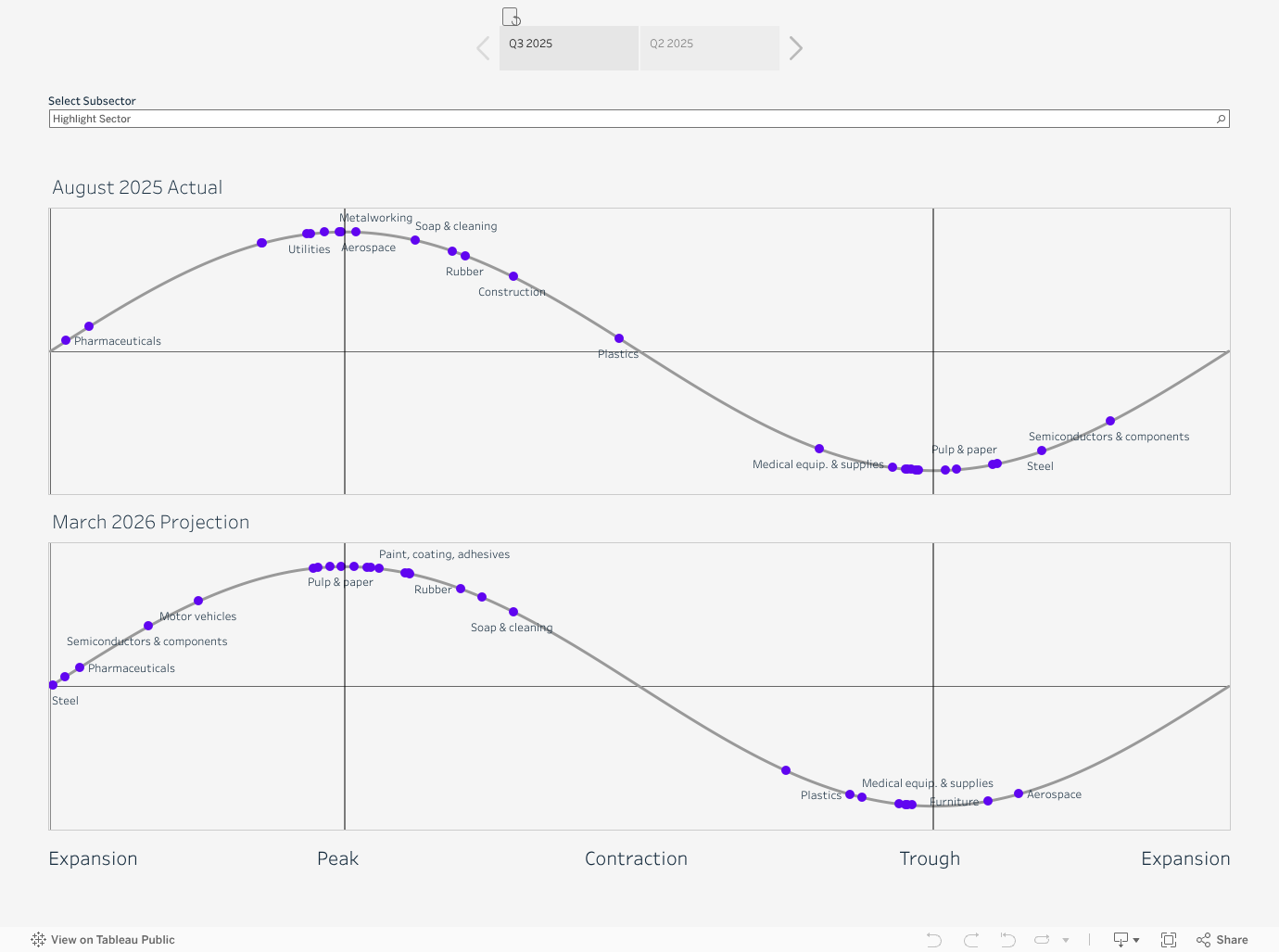
Highlights from the Current Data (Sep. 2026)
- Heightened defense spending is joining AI investment in building production momentum in manufacturing sectors like semiconductors, machinery, electrical equipment, primary metals, metal products, and aerospace, which also has substantial backlogs for commercial aircraft.
- Despite cost pressures, resilient demand has pushed motor vehicle production further into expansion. However, risks are tilted to the downside, as stock market volatility could weaken household wealth and curb vehicle purchases.
- Construction and related housing products remain weak as high interest rates constrain activity. Elevated building costs further depress demand for materials such as wood products.
- Food and beverage production has slowed modestly as rising grocery and dining costs prompt price-sensitive consumers to cut back.
- High oil prices should encourage further investment in oil extraction, supporting continued growth in mining output. Production gains will emerge gradually, reflecting the lag between investment and new capacity coming online.
Forecast for Next Six Months (Dec. 2026)
- Virtually all the US industrial sectors will expand production by 2027. Low inventory stock and accelerating new orders growth among most sectors indicate sustained demand and strengthening production in the coming months.
- High mortgage rates will continue to constrain housing activity keeping construction in contraction in early 2027. However, data center construction will support overall construction activity, helping the sector recover from its 2026 lows.
- Utilities and electrical equipment are expected to remain in expansion, supported by continued investment in power infrastructure and data centers.
- Chemicals and fertilizer products are expected remain subdued and in contraction. Weak downstream demand and manufacturers’ efforts to reduce input spending will constrain demand for these intermediate goods.
- Steel and other metal products are expected to sustain their prolonged expansion, supported by continued strength in defense spending, data center construction, and equipment investment.
Underwriters


